


Pop psychology has long posited that people can be divided into two camps, those who are left-brained (logical and focused) and those who are right-brained (creative and open-minded).
Viewing the world through that lens, Georgia Tech appears to be an unambiguously left-brained institution—a university renowned for its engineering, math and science programs, with no fine arts curriculum. But Tech’s alumni long have been making a major impact in the “right-brained” realms of arts, creative writing, film, video games, music and design. Ask them about their experience at Georgia Tech, and they describe it as a great help, not a hindrance, in pursuing careers in those fields.
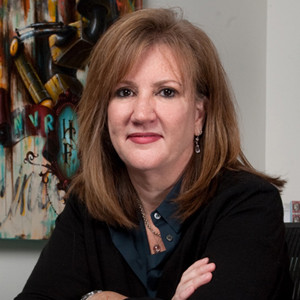 Take Susan Bonds. She came to Tech having been inspired by the Apollo moon landing, both as a triumph of technology and as a triumphant story for humankind. Bonds, IE 84, loved engineering, but also adored fantasy series like Lord of the Rings and The Chronicles of Prydain. While a student, she spent seven quarters as a co-op with Walt Disney World in Orlando, where she worked on the construction of Epcot through its opening in 1982. The project combined engineering hurdles with artistic challenges—imagining an immersive experience and then finding the engineering and technological solutions to create it.
Bonds went on to become a Disney Imagineer, working on the Alien Encounters, Indiana Jones Adventure and Mission: Space rides. “I looked at what really makes entertainment work,” Bonds said. “How do we immerse people in a story?”
Later, she worked for Cyan Worlds, creator of the video game Myst. And then, in 2003, she started 42 Entertainment, a marketing company behind several successful viral campaigns, including the “Why so serious?” promotion for The Dark Knight film. While this is far from what she studied at Tech, Bonds said her education pushed her to constantly analyze and write, and those skills have been critical to her success.
And while she doesn’t draw or paint or play music, Bonds does consider herself an artist. “I didn’t know how creative I was until I was given the opportunity to express it,” she said. “And there is a tremendous amount of creativity in engineering disciplines.”
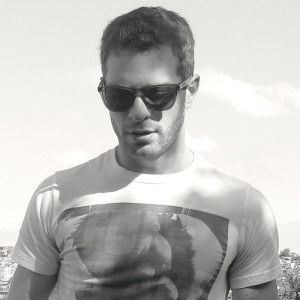 Over the past decade, the arts connection at Tech has become more prominent, including the establishment of the Center for Music Technology. That has drawn arts-minded people like Andrew Colella, an accomplished violist who chose Tech to pursue a master’s degree. “It’s not quite where I expected to land,” he said, “but it turned out to be great.”
Colella, MS MT 11, focused on computer programming while at Tech and hoped to find a career in the video game industry. He spent most of his time around architects and programmers, not musicians. But creativity was still ever-present. “Everybody is making something,” Colella said of Tech. “Programmers are heavily math oriented, but they’re still very creative. We’re not just spinning numbers and solving equations.”
Tech challenges students to not just study but to build and create, Colella said. While a student, he played with the Georgia Tech orchestra, and a connection through that organization put him in touch with the musician Janelle Monae, who was in desperate need of a violist to join her tour.
Soon, Colella was winging around the globe, playing at the Coachella festival and the Nobel Peace Prize concert in Oslo. “I can’t imagine anything like it, any profession that takes you to these places, and you get to meet these kinds of people,” he said. “It’s 30 people on a bus or running through a foreign airport, trying to pack gear on a plane at 6 a.m. after playing until 2 a.m. The highs are extremely high; the lows are pretty deep.”
When he’s not on tour or working as a programmer for a finance company, Colella finds time to write music, a task he describes as finding an interplay between two disparate things, spinning them out into something bigger, teasing them into a new direction, merging math and art—uniting the left and right halves of his brain, metaphorically speaking.
Here, we introduce you to just a handful of the many alumni who, like Colella and Bonds, are making noise in creative fields. —Van Jensen
→ Film
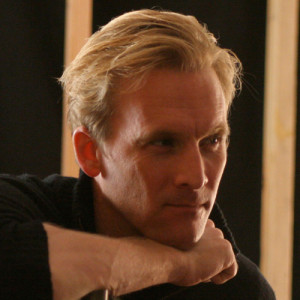 Before Julian Adams shared a submarine—OK, fine, a submarine movie—with Ed Harris and David Duchovny, he was a film-obsessed Wreck. “I always had a love for movies and an interest in filmmaking, but I wasn’t sure how to go about finding my way into a profession,” he says.
“I knew Georgia Tech had one of the finest schools of architecture. I had always loved Atlanta and felt a connection to the city. As I made my way through architecture school, I began to investigate local independent filmmaking.” While working for a South Carolina architecture and interior design firm, Adams, M Arch 98, tinkered with filmmaking on the weekends. Eventually he teamed up with his father to make The Last Confederate, a small-but-well-received (it won several awards during its film-festival run) movie about his family during the Civil War. In the years it took to create it, Adams met and worked with “a great deal of people,” including Todd Robinson, an Emmy Award-winning director who would become his producing partner. The pair eventually made Phantom, a Russian-submarine thriller that hit theaters in March and is available on DVD. Adams is currently producing and starring in Robinson’s next feature, The Last Full Measure, which stars Morgan Freeman and Robert Duvall, and is slated for a 2014 release. It’s a lot of work, but Tech prepared him for the long hours. “I have very fond memories of my time there,” Adams says. “Even though they almost worked me into an early grave.”
Osahon Tongo, Mgt 10, can relate. The 24-year-old Naperville, Ill., native played linebacker and defensive end for Georgia Tech but now is an MFA student in filmmaking at USC. Doing the Georgia Tech campus movie festival in 2008 and 2009 helped ignite his passion for film, but visiting a fraternity brother who attended USC law school after Tech sealed the deal. Tongo now spends nearly every waking hour writing scripts, critiquing fellow students’ films, attending production meetings, and working with lights, cameras and plenty of action.
“I feel really blessed that every day I am working toward literally making dreams that were written down on a piece of paper turn into reality,” Tongo says. “At the end of the day, you’re exhausted, but working in the business of make-believe never gets old.” —Austin L. Ray
→ Music
 If it wasn’t for Georgia Tech, Julienne Kung never would’ve worked with Rick Ross. The connection came through a classmate and fellow member of the Georgia Tech Symphony Orchestra, and Kung, EE 11, ended up playing viola on the Miami rapper’s 2010 critically acclaimed album, Teflon Don.
As a child, Kung frequently told friends and relatives, “I want to be a builder.” True to her word, she now splits her time between engineering and music endeavors. Spending her weekdays as a quality assurance engineer at Applied Global Technologies in Kennesaw, Ga., and her evenings and weekends performing at weddings, rehearsing and teaching others, Kung—who also plays cello—looks back warmly on her time at Tech. “My memories become sweeter as time passes,” she said. “I am excited for those students who might’ve gained valuable knowledge and life experience while in school and have yet to reap the benefits of graduating. They have so much in store for them in their future.”
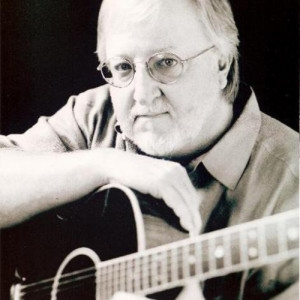 Pat Alger, Cls 69, chose Tech because it was cheaper than Auburn, and he was “going to have to pay for it myself.” He showed up with “a suitcase and a guitar,” enrolled in the architecture program, even though he “didn’t even know what architecture was,” and quickly started meeting fellow “bohemian neo-hippies” with whom he could spend “more time playing our guitars than studying.”
During his second year, he started performing at folk-rock venues, and that’s where his true passion took hold. Going up at various clubs fulfilled him creatively, but it took a toll on him academically. “I realized I should drop Georgia Tech before they dropped me,” Alger says. “At the end of my sophomore year, I was gone.”
Alger toured the world with The Woodstock Mountains Revue, Artie Traum and as a solo artist. He recorded albums for labels including Rounder, Sugar Hill and Capitol. Finally, he ended up in Nashville as a professional songwriter, penning tunes recorded by the Everly Brothers, Dolly Parton, Nanci Griffith and Garth Brooks. Most recently, he co-wrote the title song for Good Road to Follow, the ongoing digital-single series from John Oates of Hall & Oates. Inducted into the Nashville Songwriters Hall of Fame in 2010 and the Georgia Music Hall of Fame this year, Alger’s thankful for his brief Tech tenure. “It was an incubator for my fledgling talent,” he says. “Although I was academically a mediocre student, I did well in all my creative classes. I remember very well my drawing teacher John Hardy inspiring me to follow my dreams.” —ALR
→ Video Games
 Kurt Margenau, CM 07, chose his career path for a simple reason: “I always knew video games were the coolest thing ever.” After making his own Flash side-scrolling shooter game while in high school, Margenau enrolled at Tech based on the reputation of its computer science program. “I didn’t really know how to program, so I figured I should probably learn,” he said.
After switching his major to computational media, Margenau interned at gaming giant EA Tiburon, worked as a programmer at a web startup and finally landed at a small gaming studio in Austin, Texas, working with a Tech roommate. He worked on Ghostbusters: The Videogame for the Wii, and then a call came out of the blue to join Naughty Dog, an L.A.-based studio behind Uncharted and other top games.
While much of his work is technical, the process of building a game offers an artistic challenge, particularly at the conceptual stages. “It’s the most freely creative time there is, and it’s really important to have a time set aside to just think really hard about the game you want to make,” he said. “I’ll come up with a crazy set piece idea, maybe a crashing plane that you are having a shootout in, and just start making it.”
And that ability—to merge engineering and storytelling—developed at Tech. “Tech was the perfect place for me,” Margenau said. “When trying to create an emotional impact through gameplay, I have to stretch deep into both halves of my brain to make it happen, and Tech trained me for that.”
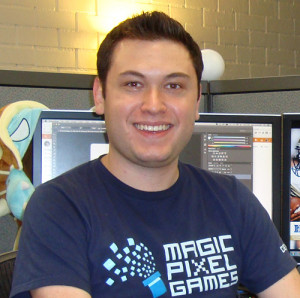 Holden Link, CM 11, shared that experience. He knew he wanted to make video games from age 5. “I guess I haven’t really grown up since,” he said. At Tech, some professors would allow students to turn in homemade games instead of papers or presentations.
He also credits the alumni network with boosting his career. He joined the Georgia Tech Los Angeles Network, which includes dozens of members, several of them working in the video game industry. Those connections helped Link land a job as a producer at Magic Pixel Games, where he recently oversaw a iOS game, Stick to It, that was inspired by Link’s senior design project.
“We’re still finding new things to do with games as entertainment,” Link said, “and we’re only beginning to scratch the surface of what games can be as art. —VJ
→ Visual Art
 As a PhD student at Tech, Amy K. Flatten suddenly realized she liked abstract art. It began as a search to find attractive posters to decorate her apartment walls and then, over the past decade, evolved into an urge to create art of her own.
Flatten, MS ESM 86, PhD ESM 93, took an abstract art class as a summer diversion and has been painting ever since, building it into a side career as she works full time as director of international affairs for the American Physical Society. The two endeavors offer a nice balance, and they overlap more often than she expected.
“One day in art class, I noticed how often my art teacher also used the term ‘problem-solving.’ That commonality with my science studies really struck me,” Flatten said. “When beginning an abstract piece, I often start with a terrible mess of lines and blotches. I have to analyze the piece and find a way out of the ‘mess’ by creating a balance of line, shape and color. It really draws upon my analytic nature.”
 Rosa Younessi, EE 05, on the other hand, grew up in the arts. Her father, GH, is an internationally known artist, and she grew up watching him in the studio. At Tech, Younessi organized a group of student painters who met on Friday nights.
“Tech was a great starting point to discover, learn and create,” she said. “You build a foundation, discover new things about yourself, and you learn new skills.”
For Keith Prossick, Arch 93, art offers a similar structure to his background in architecture. After struggling to find work during the recession, Prossick became interested in mandalas, the spiritual symbols in Hinduism and Buddhism. Prossick had been interested in art, and he began to paint mandalas.
 “It gave me the perspective of seeing a structure on all levels as a unified whole,” he said. “Mandalas are depictions of the architectural floor plans of the multi-dimensional palaces of deities. The patterns and structures were used to bring a sense of order and understanding to philosophical and spiritual beliefs.”
As he has moved fully into a career as an artist, Prossick has found the creative life to be a perfect marriage of his logical and artistic sides. “I visualize the designer perspective as being the left eye, and the artistic one, the right,” he said. “Together they bring my imagination into focus, ultimately pushing the artist in me up into the clouds while the designer in me finds stability with its feet logically standing on the ground.” —VJ
→ Visual Effects
 Dave Lo, CS 00, grew up in Atlanta watching cartoons and trying to redraw them. By the time he was ready to choose a university, computer-aided visual effects had come to dominate Hollywood, and Georgia Tech was an easy choice.
Lo also picked up an art degree from the Academy of Art University then ventured to Los Angeles with both technical and artistic skills.
Lo has since worked on films including Transformers and the Oscar-winning Rango. “As a child in the 1980s, Transformers was one of my favorite cartoons and toys,” Lo said. “Getting to work at Industrial Light and Magic and blow up robots and buildings for a job [was a] childhood dream come true.”
Tech has a strong presence in the industry, with alumni working for Sony Imageworks, Pixar and ILM, among others. Lo recently completed a contract with Walt Disney Animation Studios and is taking time off to build web and mobile applications, but he’s eager to jump back into moviemaking. —VJ
→ Writing
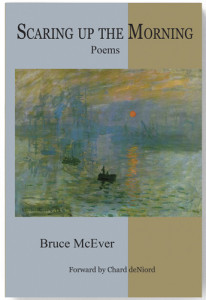 Bruce McEver has ensured that future Georgia Tech students with love for engineering and poetry, two seemingly disparate interests, won’t have to choose one or the other like he had to.
“When I was a student at Georgia Tech, it was a cultural wasteland,” said McEver, IE 66, who went on to be chairman of Berkshire Capital Securities. He also went on to write three chapbooks and two full-length poetry collections, the latest of which, Scaring up the Morning, came out this spring.
In 2009, he created the McEver Chair in Poetry at Georgia Tech, a program that brings a rotating slate of poets to campus to let students study writing. “It’s a great program not only for Georgia Tech,” McEver said, “but also for the whole writing community around Atlanta.” He writes when he can, he said, and spends time with other writers in New York. “For the past 40 years, I have been working with some of the greatest writers in the world here. They inspire me.”
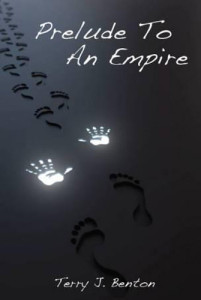 Terry J. Benton, IE 07, spends his days working in industrial engineering and the rest of his time writing about his own imaginary world. Benton’s first novel, Prelude to an Empire, came out in October 2012. It’s the first in a planned trilogy. “As a kid, I loved to read, particularly fantasy,” Benton said. “I love getting lost in different worlds.”
The second book in the series comes out this fall, and Benton is also working on a series of young adult novels called Shadow Chronicles. Benton said people are amazed that he can manage to work full time, go to school—he just earned an MBA—and turn out novels. “I enjoy writing so much, it’s not like work to me,” he said. “Someday, my dream is to have my books turned into movies.” —Sarah Baker Hansen
→ Design
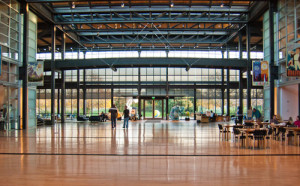 Karl Backus, Arch 79, was always interested in urban environments and the architecture that fills them. That was what drew him to Georgia Tech.
“I wasn’t familiar with the programs,” said Backus, whose firm, Bohlin Cywinski Jackson, received a lifetime achievement award from Architectural Record and the American Architectural Foundation for its work on designing Apple stores and Pixar’s studios, among other projects. “It was that I wanted to be immersed in architecture, and the environment let me do that.”
Tech’s mixing of art programs, technology and design in the curriculum and the chance to study abroad in Paris appealed to Backus.
“All those influences come together,” he said. “They are all part of what it takes to become a good architect.”
Pam Walz never would have become a costume designer had it not been for her two kids. They regularly appeared in church pageants and plays, and they weren’t the only kids who needed costumes. “I was one of the few moms who could sew,” Walz said. What once was a side project for Walz, IM 82, is now her full-time job. She has created pint-size costumes for many musicals, plays and other performances starring young people. “My favorite part is just after the point when the kids have learned their lines and the music and they get into their costumes for the first time,” she said. “It really lifts up their performances and their professionalism increases tangibly.”
Walz also works with high school students to create art and design portfolios for college applications. She got into it after her daughter needed help creating one, and realized other kids might, too. She created a company, Art Scholars Educational, to offer assistance. —SBH


 Twitter
Another GT alum who fits into this category is Anthony Francis, who got his PhD in artificial intelligence here at Tech and has now written two books in his fantasy series about a magical tattoo artist. The books are Frost Moon and Blood Rock. They are set in an alternate Atlanta, and I enjoyed both of them very much. The library was lucky enough to have Anthony give a talk around this time in 2011, and the guide we created for the event is still available - http://libguides.gatech.edu/frostmoon.
What about foreign language skills?
Clearly I am “left-brained” and this article reminded me of an experience when I first came to Ga Tech. I started as an Arch major, alas my only artistic talent was drafting. In one class we were told our assignment was, and I quote “space is lighter than orange”. So I raised my hand and using my left-brain asked simply “what does that mean; I am not clear on the assignment”. In my mid-term feedback I was told “you have a bad attitude”. Happy ending - I subsequently left Arch and was a cum laude graduate in Engineering and have had a successful career. Mc
Mc