


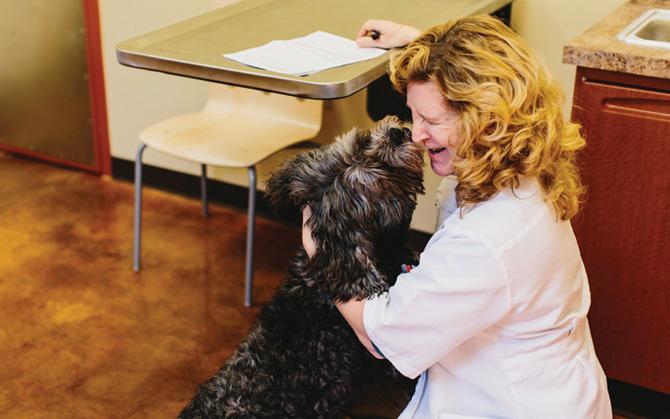
Linda Ellington, Bio 82, might be Atlanta’s favorite veterinarian. She’s certainly the only one ever shut down by NATO. After years of providing top-notch care out of a beloved—but crumbling—old building, she just built her practice a state-of-the-art hospital that would make even the most skittish critter shiver with joy. But can she make it through moving day?
8:51 A.M. On Thursday, Nov. 7, Dr. Linda Ellington parks behind the old brick building, lets herself in through the creaky back door, stashes her purse in the storage room and pulls her white lab coat off the rack for the last time.
By now, she could make her way around the place blindfolded: Through the orange-tiled waiting room, past the overstuffed front office, down the hall lined with exam rooms to the treatment room where her staff always gathers despite the cramped quarters. Back down the hall, she would know exactly where to turn the corner toward the silent sickbay of the isolation room and the raucous boarding kennels, the big dogs’ barks echoing hard against old wood and concrete and chain link fencing. Without looking, she could cross the muddy play yard to the dim back room with its rows of wooden crates and cages full of animals waiting for homes better than the ones they’ve already known.
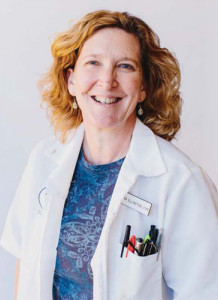
Dr. Linda Ellington, Bio 82
Dr. Ellington, Bio 82, has worked here, at Dearborn Animal Hospital in Decatur, Ga., since 1986, when she was hired straight out of veterinary school at the University of Georgia. Dearborn itself has been here—in this red-brick building on East College Avenue, low-slung with a funny turret above the front office—since 1948. For Dearborn’s patients, animal and human, it feels like home. For Dr. Ellington, who once lived with her family in the apartment upstairs, the place is home.
She’s left three times before. In 1989, she moved to Mexico with her husband, Scott, Psych 83, to do missionary work. In 1989, she left again for Scott’s graduate studies in the U.K. And in 1994, she left again to work with Scott as house parents at an international school in Germany, where she almost gave up vet work entirely. But she always came back. And in 2009, she bought the practice, becoming Dearborn’s fourth—and first female—owner.
Now she’s preparing to say goodbye to the old brick building once more. This time, though, she’s bringing the rest of Dearborn with her. The practice’s new address is a mid-century industrial building, a former candle factory that construction crews have been turning into a state-of-the-art veterinary hospital since January. It’s bigger, it’s brighter, it’s a complete unknown.
Tonight, after the last patient hops or crawls or scampers out the old front door, Dr. Ellington’s staff—six doctors, five technicians, six front office staff and four kennel employees—will begin the process of relocating every last scalpel, kibble, leash and syringe to the new place, exactly 1 mile from the old one. Just around the block but light-years away.
That’s the plan, at least. But first Dr. Ellington has to make it through the longest day of her life.
9:10 A.M. Smoke, an antsy gray pitbull, is her first order of business. In an exam room where Post-It notes declare cabinets and drawers “EMPTY” and supplies litter the peeling countertops, Dr. Ellington administers a quick vaccination, a routine stool sample, and a cat treat for his troubles—the dog snacks are all packed. He doesn’t seem to notice or care.
Out in the waiting room, Smoke sniffs at a pair of beagles, who soon follow their owners, a middle-aged couple, back to the exam room.
Daisy, pushing 14, isn’t doing well—no energy, no appetite. “I just don’t want her suffering,” the man says. Becca, a vet tech in red scrubs, whisks Daisy off for X-rays and Miss Sally takes her place on the table. She’s easy—just needs her anal glands expressed. When the deed is done, Dr. Ellington grabs a squirt bottle. “Listerine,” she says, “is great for cleaning butts.”
When Daisy’s X-rays are ready, one owner follows Dr. Ellington to a room across the hall. They stare at the dog’s illuminated insides. Her liver is a concern—it might be Cushing’s disease, or cancer. The man purses his lips, his bristly gray mustache flaring. He blinks hard. “I just don’t want her to suffer,” he says again, steadying himself against the door frame.
Back in the exam room, when Dr. Ellington mentions palliative care, the couple’s faces crumple. “Not every day needs to be a mountaintop day,” Dr. Ellington reminds them. They decide to watch Daisy for a few more days, see how she does. After all, the other night she rallied and ran around the house like a puppy.
“All right, Doc,” the man sighs. His wife gathers the leashes.
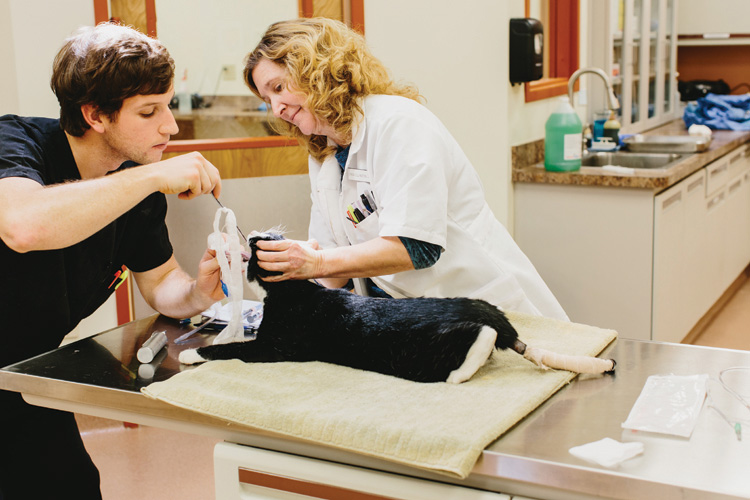
Dr. Ellington and Ian, a vet student, tend to a feline patient.
10:20 A.M. At the far end of the hall is the treatment room, which also serves as the current building’s ICU, post-op recovery area, phlebotomy lab and imaging center. By the door, a whiteboard lists the names of admitted patients: Fifi, Chester, Malachai.
Dr. Shannon Day, Dearborn’s youngest vet, is locked in negotiations with an icy-eyed Siamese hooked up to an IV pushing fluids. “Please pee for us, Sissy Spacek!” she pleads. Most of Dearborn’s patients are dogs (they also see cats, rabbits, ferrets, birds and more), but even for Dr. Ellington, today is oddly canine-heavy. She squeezes past to consult with Dr. Dixie Cely about a mutt’s blood work (diagnosis: not diabetes). Then she glances at the clock.
Over at the new building, the practice manager, Scott Zimmerman, is waiting for the fire marshal, who’s overdue for the inspection to grant Dearborn its certificate of occupancy. The week has been riddled with last-minute snafus: countertops installed in the wrong color, concrete that couldn’t be poured in the rain, one light fixture that just wouldn’t turn on. Dr. Ellington was over there before her shift this morning, scrubbing every surface free of construction dust.
But even unfinished, the new Dearborn is a dream. It’s 13,632 square feet, three times bigger than the old place. The new waiting room has a dog zone and a cat zone, a row of old church pews lining one wall. Each of the six new exam rooms has a computer—the practice is finally going digital. The new treatment room has six exam tables and two walls of cages for pre- and post-op animals. The pharmacy is sprawling, accessible from every exam room and the treatment room, and outfitted with a Cubex, a vending machine with a biometric reader for dispensing controlled substances (like pain medication or euthanasia solution) to replace the hot pink three-ring binder they’ve been using for years. In the boarding area sit banks of roomy, gleaming stainless steel cages for small pets and soundproofed kennel runs for bigger dogs. Outside, a fenced-in, AstroTurf play yard. In the back, a cavernous space for training classes and adoption events. Everything was built to earn the highest rating from the American Animal Hospital Association. The ceiling is pocked with skylights, the walls all cozy shades of yellow and orange.
“It’s just the building that’s changing,” Dr. Ellington says to anyone who looks a little bit sad about the move. “The people and the way we care for animals will be the same, and that’s what really matters.”
 10:54 A.M. At the old building, the treatment room, 20 square feet, is packed with doctors and techs and groggy animals. It seems to grow smaller by the minute.
Scott appears in the doorway. Bad news: The fire marshal still hasn’t arrived, but the new place is somehow short one fire extinguisher—an industrial 20-incher, not the kind they could pick up at Ace Hardware down the block. Without it, Dearborn’s certificate of occupancy will be withheld and their moving day delayed.
Sadie, an old black lab mix, is brought in to have an ear hematoma drained. She bucks herself off the exam table and is wrangled to the floor, where Dr. Ellington tucks a folded towel between the cold tile and the dog’s long snout and administers sedatives. She waits for the drugs to kick in while weighing her options.
The plan was for the office to close tonight and reopen on Monday in the new location. That’s three days out of service. The last time Dearborn closed was in 2009, for the funeral of Dr. Bruce Jackson, the practice’s previous owner—even then, it was just for half a day. In the 27 years she’s been here, Dr. Ellington can’t remember another closing, but this had been the plan for months.
“I don’t like last minute things,” she says to the room. “This is not my happy place.”
Once it becomes clear they won’t be able to move in the morning, Dr. Ellington makes the call: Dearborn will be open in the old building tomorrow at least for a half day, one last blast on East College Avenue. Vet tech Becca is dispatched to print up a new sign for the front door. Dr. Ellington turns back to Sadie, now fully conked out.
The dog’s right ear, usually floppy, is swollen to the size of a potato, full of blood from a capillary that burst under her skin, likely from flapping her head to relieve discomfort from an inner ear infection. Ian, a veterinary student, positions a lamp to shine down on the dog. Dr. Ellington spreads out some towels and crouches—better to operate down here than wrestle a flailing mutt.
In Hermosillo, Mexico, where she lived while her husband taught at a local college, she opened a veterinary clinic and started an outreach program in the local community. Children would bring their pets for check-ups, sometimes when they didn’t have access to medical care themselves. So she corralled some pediatricians and dentists to treat the kids, too. There’s power in meeting patients where they are.
Now, Dr. Ellington walks Ian through shaving the fine hairs from the underside of Sadie’s ear, sterilizing the area with Betadine. She makes a tiny incision in the taut skin and gives it a squeeze. Blood fountains up from the ear, a pool of scarlet spreading across the towels on the floor. After coaxing out the last clot, she inserts a cannula with a drain into the incision, stitches it up, then trims Sadie’s nails. “Lucky girl, you get a mani-pedi with your ear surgery!” she exclaims. Sadie responds with a snore.
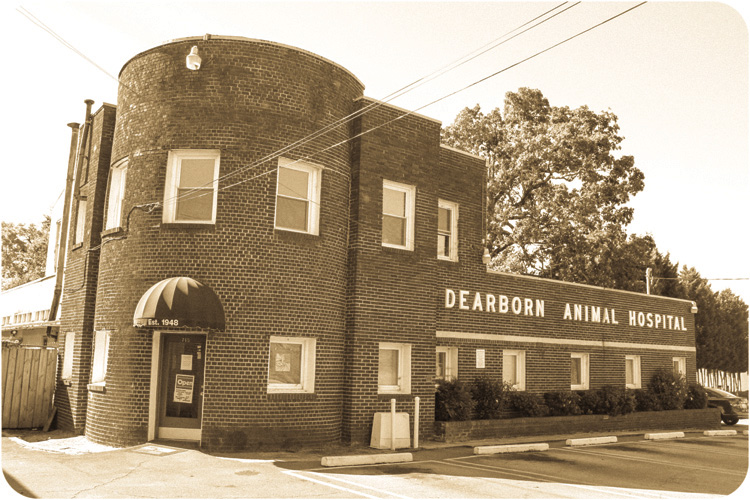
Dearborn’s old home on East College Avenue in Decatur, Ga.
11:45 A.M. Molly is a black-and-white pit bull mix brought in a few days before, 4 months old with a failing liver. Her abdomen is full of fluid, her eyes and her white fur patches tinged yellow. In the pharmacy, Dr. Ellington fills a syringe with the cerulean liquid—the euthanasia solution Socumb—and sets off down the hall to the isolation room, where her sickest patients are cloistered.
Some vets will euthanize a dog or cat at the owner’s whim—because the animal is aging or annoying or simply unwanted—but not at Dearborn. Instead, they keep the animal, treat it if it’s sick, then find it a new home. Dr. Ellington’s staff also won’t turn away an animal in pain just because its owner can’t pay—they’ll do what they can, work out a payment plan. The hospital works with a few locals who regularly bring in animals rescued from dumpsters or ditches; sometimes pets are just left outside the hospital in cardboard boxes or tied to the dumpster. Dearborn takes them all in. “My accountant thinks we give away too much,” Dr. Ellington says, and shrugs.
Sometimes, though, there’s not a choice. Some animals, like Molly, won’t get better. There’s a pricey surgery that might help, but her owner can’t afford it, and it’s too risky to justify the cost. Her condition is terminal.
At the doorway of the isolation room, Dr. Ellington steps on a bleach-soaked towel in a bin to sterilize her shoes and enters the fray. A tuxedo cat sits in a crate by the door, rubbing his face against the bars. He was left for boarding years ago and never picked up. He’s a Dearborn office pet now, but today he’s got a cold they don’t want spreading. “Hi, Jeremiah. Are you still sneezing?” she asks. “You pooped like a champ today. Good boy!”
At the back of the room is another crate, a skinny pup with a distended belly curled in one corner. The syringe is ready, but Molly is too dehydrated—Dr. Ellington can’t find a good vein. Liese, a vet tech in green scrubs, brings in an easier-to-administer sedative to prepare the dog for the second option, an inter-cardiac Socumb injection. “Yes, you’re very brave,” Dr. Ellington says to the dog. And then, to the room: “If we can’t make them better, the least we can do is make them not suffer anymore.”
 12:26 P.M. As they wait for the sedative to take hold, Liese mentions that the woman who brought Molly in a few days before has just arrived with another sick puppy. Dr. Ellington leaves the black-and-white dog napping—the drugs will hold for an hour or so—and meets her brown-and-white littermate in an exam room, where the woman has been crying.
With her sister, Molly, gone, the woman says, Diamond has stopped eating. Her stool is loose, her urine discolored. Dr. Ellington looks at the dog’s file, notes that she hasn’t been vaccinated; the woman says she was waiting for a free clinic in her neighborhood. Diamond shivers on the exam table.
Dr. Ellington suspects canine parvovirus. “Oh, Jesus,” says the woman. Parvo is preventable by vaccine, but potentially devastating otherwise—without treatment, most affected puppies will die of either dehydration or a secondary infection. Dr. Ellington takes a stool sample. The woman’s cell phone rings and she answers: “He sold you a bad puppy. He sold us a bad puppy.” She sobs and stumbles out of the room and down the hall. The dog whines. “I know, sweet pea,” Dr. Ellington says, rubbing her belly and between her ears. “I know.”
After the woman returns and the parvo test comes back positive, Dr. Ellington explains the plan of attack: Start Diamond on fluids immediately, then antibiotics. They’ll keep her at Dearborn for monitoring. They should have an idea of her chances within 24 hours—right now, it could go either way. The doctor’s tone is low, steady: “This is why we vaccinate.”
“I feel so bad,” the woman says, her voice thick. She kisses the dog’s head before she leaves. “I love you.”
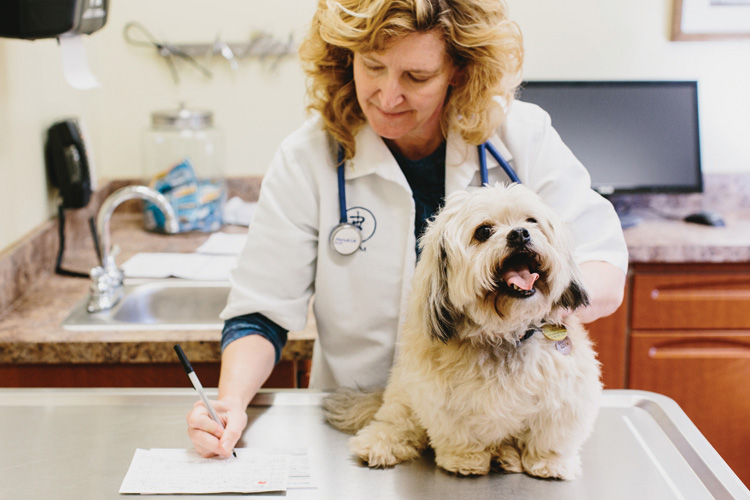
Dr. Ellington tends to paperwork for a fluffy friend.
1:17 P.M. Down the hall, Dr. Ellington bleaches her shoes again and leads Diamond to a towel-lined crate in the back of the isolation room, across from her sister. Liese arrives with the Socumb. Dr. Ellington crouches before Molly—still sedated, breathing shallow—and pushes the blue liquid into her heart. Dr. Ellington strokes the dog’s thin fur until her heartbeat stops, then pulls her into her arms and lowers her into a white plastic bag that Liese holds open.
The body will be placed in a freezer down the hall. If the woman chooses not to claim the remains for burial at home, they will go to Paws, Whiskers & Wags, a pet crematory a few blocks away. A van comes for pickup a couple times a week.
As they clean up, Dr. Ellington asks Liese for the latest on the fire marshal, but no one seems to know.
 12:13 P.M. Dr. Ellington usually doesn’t take a lunch break, but today she finds time for a few bites of potato and sausage pie she brought from home a few days before. Someone has given her a large bottle of Rolaids with a bow on top; she chews a few while catching up on phone calls and billing paperwork. “His lab work is extraordinarily boring,” she says, leaving a voicemail for the owner of a dog named Brady.
Dr. Ellington’s daughter, Melinda, IAML 12, has been helping organize the moving schedule and develop Dearborn’s new system for tracking controlled substances. She drops by with a Tervis tumbler of coffee for her mom and grabs a Rolaids for herself.
3:00 P.M. A text message from Scott: “we are ready for the fire marshal!”
3:25 P.M. Scott texts again: “inspectors are at the building!”
“I still have the smell of Rolaids on my breath,” Dr. Ellington says, reaching for the bottle. “Throwing another in there won’t hurt.”
3:40 P.M. Sandy is a golden retriever mix the shape, size and color of a hay bale, and she keeps randomly going lame in one leg. “Of course she’s OK now,” says her owner, a regular at Dearborn with her other dog, Mocha, who has anxiety troubles. The doctor squats before Sandy, runs her hands up and down the dog’s limbs, lifts one paw to shift her weight to the other side. It could be neurologic, not orthopedic—like a pinched nerve—but that’s hard to diagnose in dogs. The women shrug. “No charge today,” Dr. Ellington says, standing up. “Your dog’s not limping.”
Dr. Ellington returned to Dearborn from Mexico in 1992; two years later she left for England, where her husband had been admitted to a PhD program. She took a job as a vet on a Royal Air Force base in Feltwell, Norfolk, where she was only supposed to treat the base’s working animals, but soon airmen were bringing their pets from home, too. The local veterinarians noticed their business declining and grew displeased. Someone complained to the local member of Parliament, who ran it up the chain of command until one day Dr. Ellington’s base commander—whose cat she had treated—summoned her to his office. And that is when Dr. Linda Ellington learned she had become possibly the only veterinarian to ever be shut down by NATO.
The Ellingtons’ next stop was the village of Rudersberg, in Germany, where they lived at an international Bible school as house parents for a few years. German law required vets to have lived in the country for six years before becoming licensed, so Dr. Ellington put her practice on hold; when her family returned to the States, she thought she might hang it up for good. But then Dearborn had a part-time opening and she figured, why not? Soon she was back up to full time. And then, in 2009, when Dr. Jackson announced he was selling the practice, she found herself in his office, telling him she wanted to buy it. “Good,” he told her. “You’ve been acting like you owned the place for years, anyway.”
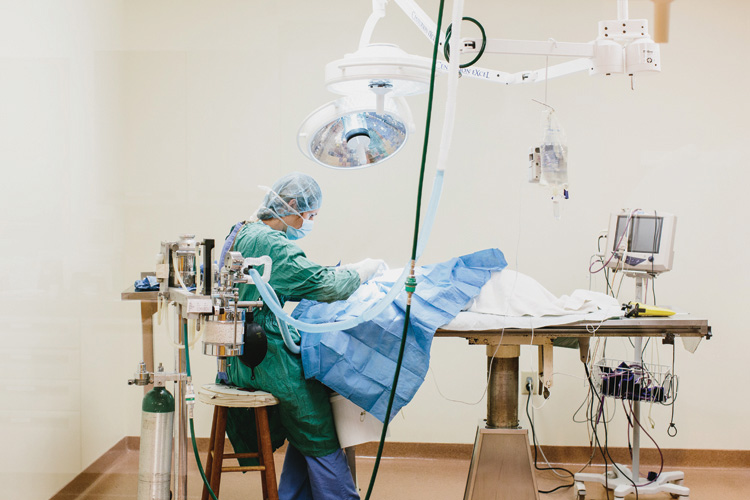
Dr. Ellington in the OR at Dearborn’s new office.
3:56 P.M. In the midst of shaving down a goofy Samoyed with a hotspot, Dr. Ellington hears that the fire marshal’s inspection is done. Kind of. Everything they worried would be a problem was fine, but there were a few small electrical glitches, so he’ll be around for another inspection in the morning. Hopefully.
4:23 P.M. Dr. Ellington is consulting with the owner of Nyka, an itchy Rhodesian Ridgeback, when her phone rings; it’s the construction foreman. “This is about the new building,” she says to the man, who nods. She steps into to the pharmacy, where she’s soon translating a conversation between the foreman and his Spanish-speaking work crew. “He says we’ll get the C.O. tomorrow,” she says. “But he also said he’d have it Monday … ”
After a skin test shows no mites for Nyka, Dr. Ellington steps out of the room again to retrieve a bag of hypoallergenic dog food. In the hall, she’s handed a cardboard box full of leashes, food bowls and bags of treats. Someone from the girl’s running club at Wesleyan School in Peachtree Corners, Ga., has just come by to deliver the box, plus a check for $125—the girls picked fundraising for Dearborn as their fall service project.
Back in the exam room, Dr. Ellington shows Nyka’s owner the box and the goosebumps on her arm. “Somewhere,” she says, “we’ve made a difference to somebody.”
The phone rings again—it’s another patient, a German woman, and Dr. Ellington is soon speaking her third language of the day.
When Nyka is finally on her way, a plan for diet monitoring in place, Dr. Ellington takes her first sip of the coffee Melinda brought an hour ago. It’s still a little bit warm.
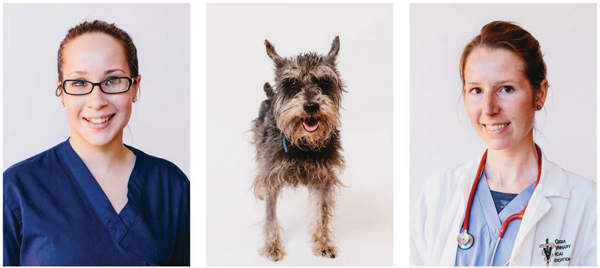
5:45 P.M. “That looks marvelous,” Dr. Ellington says, running her fingers down the incision on the big black lab’s belly. Jack is 13, diabetic, and a few weeks ago had a huge mass removed from his chest. Now it’s time for the staples to come out.
His owner, tall with a thick mustache, holds him down, belly-up, but it’s not enough. Vet student Ian brings in a nylon muzzle and soon has the dog in a wrestling hold on the floor. Dr. Ellington crouches next to the dog, a MagLite in her teeth, gingerly prying out staple after staple from the writhing dog’s underside.
Jack’s owner stands off to the side, issuing encouragement like a Little League coach. “It’s outrageous, I know. It’s an outrage,” he says as his dog whines. “Good boy, Jack. Jack, Jack. You a good boy. This’ll be fast. Good boy, Jack. You’re the man!”
Jack passes gas, his last remaining means of protest.
“Jack’s alive because of her,” the man says, nodding toward Dr. Ellington. “She’s one of the most amazing people I’ve ever met.”
When the staples are out, Dr. Ellington exhales and sits back on the floor. Jack, released from Ian’s grip, scrambles to his feet and leaps onto the doctor, a foreleg on each of her shoulders, as close as he’ll get to saying thanks.
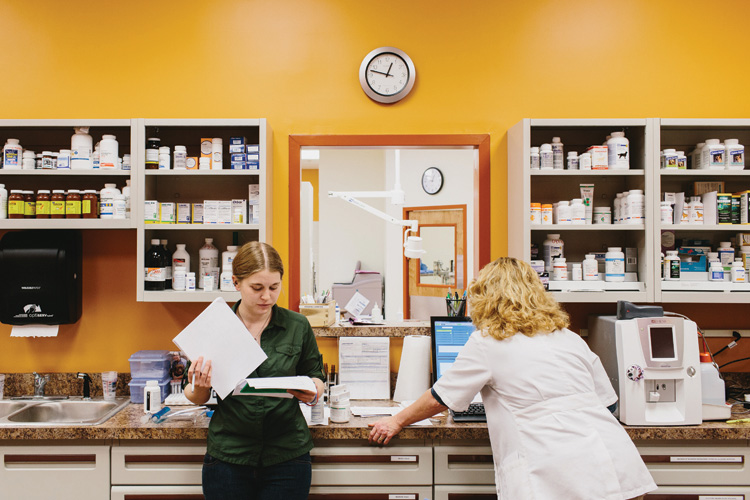
Dr. Ellington and her daughter, Melinda, IAML 12, in the new office’s pharmacy.
6:15 P.M. The office officially closes at 6 p.m., but as always there are some stragglers. There’s a Chihuahua in surgery—a car accident, a cracked pelvis—but another doctor has that under control. On rope leashes in the hallway, waiting for their owner to pick up bags of prescription food, are two recent rescues, a pitbull named Duchess and a lanky golden retriever named Cash Money Baron. Dr. Ellington gives each a good belly scratch before ducking into the storage room, slipping off her white lab coat and pulling on a blue leather jacket with zippers up and down the sleeves. She’s done with her not-quite-last day at the old Dearborn, but she’s staring down a few more hours of work at the new place—more dusting, more cleaning, more making sure everything is just right.
The certificate of occupancy finally will be granted next Tuesday, Nov. 12, at 9:10 a.m. Dearborn will open its new doors the next morning, its first patient a mean old cat taken to eschewing her litter box. But Dr. Ellington doesn’t know that yet. She doesn’t even know what time she’ll get home tonight. Then again, as she leaves one Dearborn for another, she already is.



 Twitter
Dearborn is my family! Thank you Dr. Ellington for your love, passion, and knowledge.
They are the best!!! I trust everyone there and the prices are fair.
I mentioned to a friend of mine that I may be looking for a new vet. My friend lives in Avondale and forwarded this article to me. There are healthcare professionals in the world and then there are “healers”. Need I say more. This story about Dr. Ellington was inspirational.