


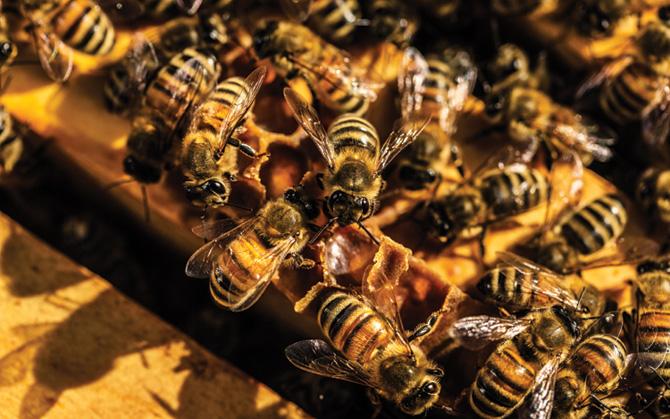
For years, Amelia Gambino has been focused on Yellow Jackets. As the assistant vice president of news and campus communications, she oversaw the effort to spread the good word about Georgia Tech. But when Gambino is off campus, she’s focused on bees. An avid apiarist, Gambino has served on the board of directors for the Metro Atlanta Beekeepers Association and plans to devote more time to her hives after her recent retirement. She talked with the Alumni Magazine to shed some light on her secret life with bees.
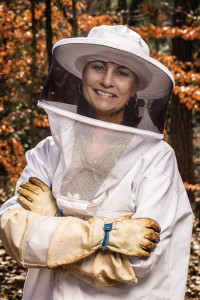 Why bees? I was very curious about beekeeping and talked about it all the time. My husband, Tom [CE 79], decided it was time to push me over the edge, so he gave me all the equipment and a beekeeper’s suit for Christmas in 2009. Four weeks later, I was taking classes and ordering bees.
What’s your setup like? I have three hives but have had as many as five at one time. They’re set up in the backyard right at the edge of the woods—close enough that I can see them from the kitchen window but far enough away to not scare guests. Some people get very nervous about the hives.
What’s the biggest misconception people have about bees? That they are out to sting you. Not so. Their main mission in life is to protect the hive and their queen. One of my hives is very docile, and one has a bad attitude. It just depends on the temperament of their queen.
What’s the biggest challenge of beekeeping, aside from not getting stung? Getting stung is part of it—not the fun part. The biggest challenge is keeping the bees healthy. Mites, bacteria, hive beetles, dampness, cold and nutrition are all things a beekeeper has to monitor. Colony Collapse Disorder is a real problem, too.
Did that impact you when it was such a widespread problem? Colony Collapse Disorder remains a problem. Is it pesticides, parasites, fungicides or nutrition that causes colonies to die off suddenly? The winter is also exceptionally hard for bees. I’ve lost a couple of hives over the years to CCD or simply not being strong enough to survive winter. It is pretty common.
Post-retirement, are you going to focus more on beekeeping? Yes, I hope to take some classes and get my Master Beekeeper certification.
What do you do with the honey once you’ve collected it? No sense ruining a good hobby by making it into a business. We give away the honey to friends and family. I keep everyone in Institute Communications supplied with honey year round.
How do most people react when they find out about your hobby? They are always surprised and tend to think it is a dangerous thing to do. Interestingly, there are quite a few beekeepers at Tech and several research projects involving bees going on around campus.
How often do you have to clarify the yellow jackets/bees distinction? Throughout my entire career at Tech, I’ve had to correct people who called Buzz a “bee.” Buzz is a Yellow Jacket. It doesn’t bug me to explain the difference in bees and yellow jackets. It’s an opportunity to make the distinction and raise awareness for the importance of honeybees’ role in our food supply.
Be honest—would Bees make a better mascot than Yellow Jackets? No! Although very industrious, honeybees can be very gentle. Yellow Jackets are aggressive, resilient and sting like the devil.




 Twitter