


Few people know how to market to gamers and geeks like Paul Raines, IE 85, who leads the largest brick-and-mortar and online storefronts in the video gaming industry. This summer, GameStop doubled-down on nerd culture by acquiring ThinkGeek.com, which sells sci-fi novelty items and collectibles. We reached out to Raines to find out what’s most challenging about meeting the demands of such a rabid and influential audience.
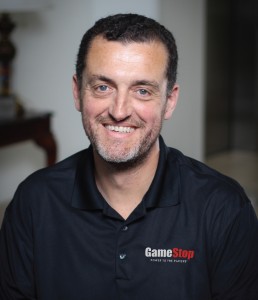 You used to be a top executive with The Home Depot here in Atlanta. Though GameStop is a major retailer, the audience is quite different. What are your most important tactics in marketing to gamers and sci-fi geeks?
The most important thing about our customer base is that you have to be authentic. We compete primarily against big box stores such as Target and Walmart, as well as Amazon online, all of which sell a wide variety of goods. One out of two video games sold in the U.S. is sold at a GameStop. We focus on our passion for games and gamers, and they really respond to that. We also build strong relationships with our vendors, who are monopolies. There’s only one company that produces Super Mario; there are no other alternatives. So we work closely with them to give our customers special experiences and exclusives that our competitors can’t. One other area that’s different is that we have a buy-sell-trade platform. If you play a game and finish it, you can trade it in for credit. Last year, GameStop had over $1 billion in trade credit—it’s a special kind of currency that provides tremendous value and builds loyalty.
Who is GameStop’s primary audience?
Twenty percent of our customers make up 80 percent of our sales. Half of this 20 percent is made up of hardcore gamers, males age 16-28, who are typically enthusiasts for specific video game genres, whether sports or role-playing games or first-person shooters. The other half of the 20 percent is made up of the friends and families of these gamers who buy the games as gifts.
Sci-fi and gaming and comic books used to be seen as more of a fringe market made up of mostly teenagers and kids. But the so-called geek market is now pretty mainstream and knows few boundaries, including age, gender or race. How has this happened?
For one, teenage geeks grow up to become older geeks. People have been playing the Xbox for years, and they take the gaming habit with them. Boomers have habits that previous generations didn’t. Females are also more into gaming than ever, partly because gaming has more genres than ever—it’s not just sports and action-adventure. Believe it or not, dance games are the fourth largest video game niche. Titles like Assassin’s Creed open up more thoughtful storytelling by letting you explore different eras throughout history, which open up gaming to a wider range of people. Finally, consumers also have more leisure time than ever, and a greater thirst for entertainment, which video games can fill.
Why did GameStop acquire GeekNet and ThinkGeek?
We got into online gaming because we are constantly looking at ways to diversify our business. As we looked around for opportunities, we discovered ThinkGeek was one of our audience’s most respected and in-demand brands. In our PowerUp rewards program, which has 42 million-plus members, ThinkGeek.com gift certificates were the No. 1 requested reward. Plus ThinkGeek already held a lot of great licenses such as Star Wars, Star Trek, Marvel Comics, Doctor Who, Game of Thrones and others. We feel that with our processes and supply chain expertise, we can make shopping at ThinkGeek an even better experience, and we plan to start selling more ThinkGeek products in our GameStop stores. There’s a lot to leverage, including possibly some other specialized store fronts.
I’ve read that GameStop was getting more into selling old-school games and consoles. What power does nostalgia have these days as a marketing tool?
It’s extremely powerful. We stopped carrying Nintendo 64 games about 10 years ago, and there was such an outcry from our customers, especially over titles like Legends of Zelda: Ocarina of Time, that we reopened our trade program to accept older games to make sure they were available to those who wanted them. Older games carry tremendous emotional connections to the games and consoles they played growing up. And to make sure these older games are still playable and an enjoyable experience, we run a big reconditioning operation.



 Twitter