



Al Merrill was 10 years old when he decided to become a scientist. Now a
professor of biology and Smithgall Institute Chair in molecular cell biology at Georgia Tech, with degrees from Virginia Tech and Cornell, he holds tight to the sense of wonder that first drove him to raise tadpoles and tinker with chemistry sets, and he relishes opportunities to spark similar awe in young minds.
Whether he’s shaping the academic careers of Tech students or leading kids on outdoor adventures through the Sierra Club’s Atlanta Inner City Outings, he says, “My goal is to show that there are so many wonderful things in nature. Looking at it and wondering how it works is the first step toward becoming a scientist.”
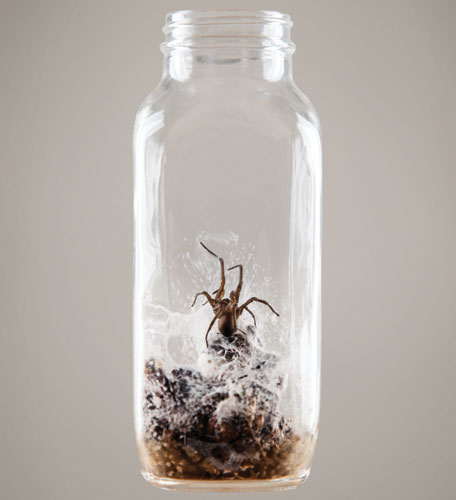
Still a critter-catching kid at heart, Merrill keeps a number of Kukulcania hibernalis—more commonly known as Southern house spiders—as office pets. “People will often find these looking very emaciated in corners of the building and bring one to me in a jar. … I’ll give it some water. It’s kind of touching, actually. You’ll see this spider drag itself over to the drop of water and drink it, and over the next few days it’ll fill out. I’ll bring it some crickets to eat and build itself back up again. … Very few spiders are injurious to humans. They’re fascinating organisms for how they’re able to find their niche.”
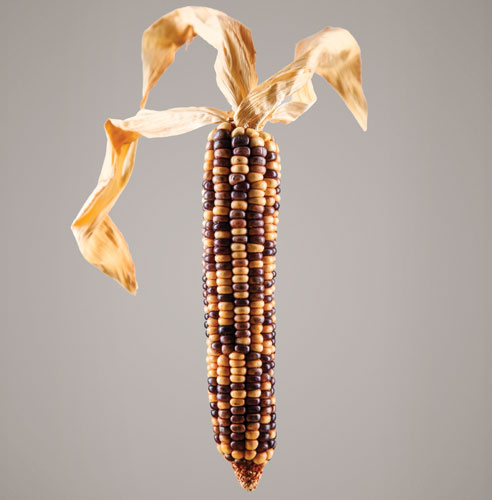
Merrill’s research concerns a family of molecules called sphingolipids. He is particularly proud to have discovered, with a collaborator at the USDA labs in Athens, that sphingolipids are the target of fumonisins (mycotoxins that contaminate corn in many parts of the world and can cause cancer in humans, lung failure in pigs and a particularly gnarly horse disease called leukoencephalomalacia). In recent years, Merrill’s lab has spearheaded the use of mass spectrometry to study other aspects of sphingolipid metabolism and the roles they play in health and disease.
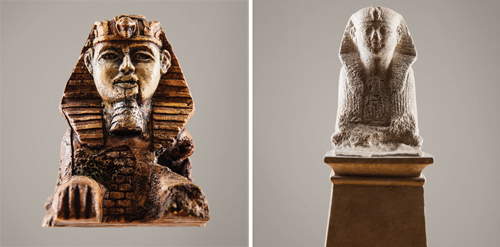
Merrill’s shelves are guarded by several sets of Great Sphinx of Giza bookends, and photos of the ancient monument hang on the walls. “The individual who first discovered sphingolipids, J.L.W. Thudichum, named them ‘sphingosines’ because they’re very enigmatic molecules. The enigmatic sphinx has been a symbol of that whole field for decades, and we are pleased to have helped solve some of the mysteries about these important biomolecules.”
A sense of wonder has followed Merrill throughout his career; so, too, has a certain houseplant. “When I was an undergraduate student, my research adviser had a Christmas cactus outside his office. As a reminder of what I learned from him, in 1972 I snipped off a piece, and it’s grown with my career, from training in Virginia, New York and North Carolina to being a professor at Emory then Georgia Tech. If I had a bigger pot I think it could grow even larger.”



 Twitter